
Northern Brazil expands fuel infrastructure to support the growth of agribusiness and new logistics corridors.
The growth of agribusiness and the consolidation of new logistics corridors are increasing the demand for fuel infrastructure in the North and Central-West regions. The expansion of production and consumption hubs, coupled with the need to connect different modes of transport, increases the importance of terminals, river ports, and distribution centers to guarantee supply and improve the efficiency of product movement.
This scenario demands projects capable of integrating equipment, systems, and distinct stages of the process, from receiving and storing fuels to transferring and shipping them. It also requires solutions compatible with a variety of products, capacities, and installation conditions, as well as resources that contribute to safety, reliability, and operational continuity. In projects implemented in regions with specific logistical challenges, engineering must also consider the challenges of access, assembly, maintenance, and support.
“Cada terminal tem uma realidade própria, com produtos, modais e condições particulares. O papel da engenharia é traduzir essas variáveis em um sistema seguro e confiável, sem complicar a rotina do cliente”, reforça Guilherme Ribeiro, Gerente de Contas da FLUXO.
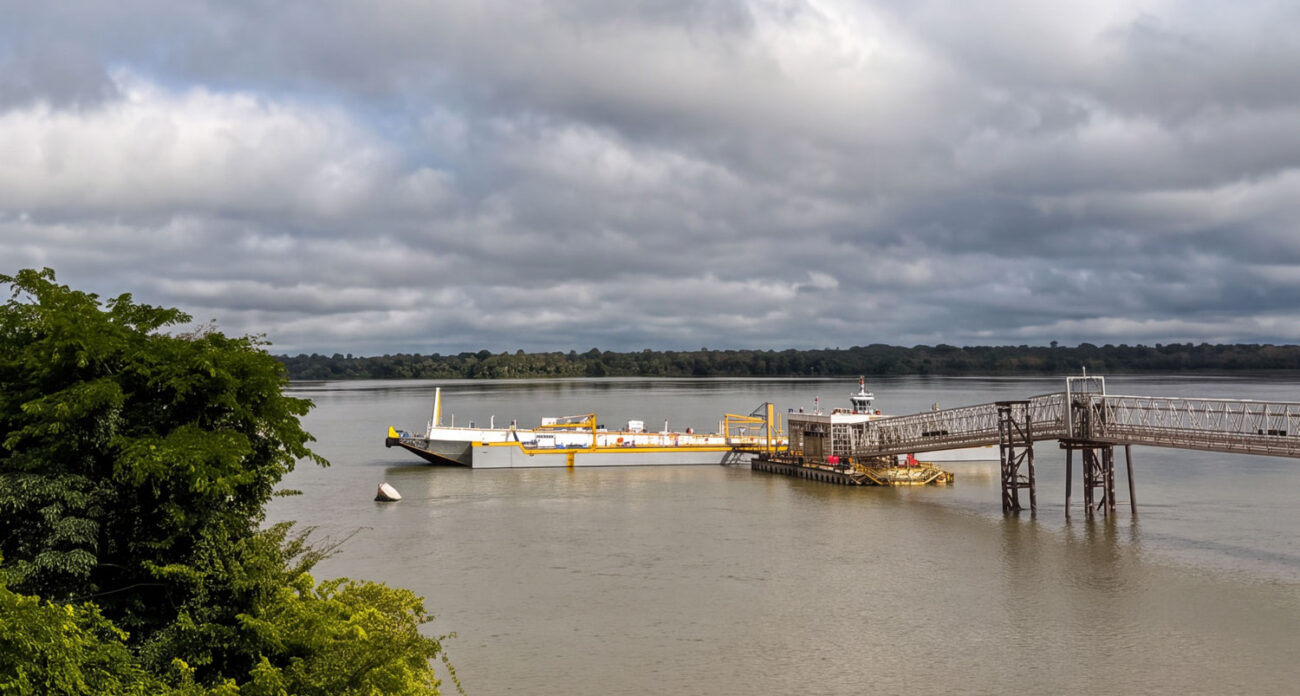
Raízen invests in integration and automation at its Santarém and Miritituba terminals.
Connected by strategic river and land routes, the Santarém and Miritituba terminals bring distribution centers closer to regions with strong agricultural activity and consumer markets. To keep pace with this dynamic, Raízen relied on FLUXO to develop integrated solutions tailored to the characteristics of each terminal.
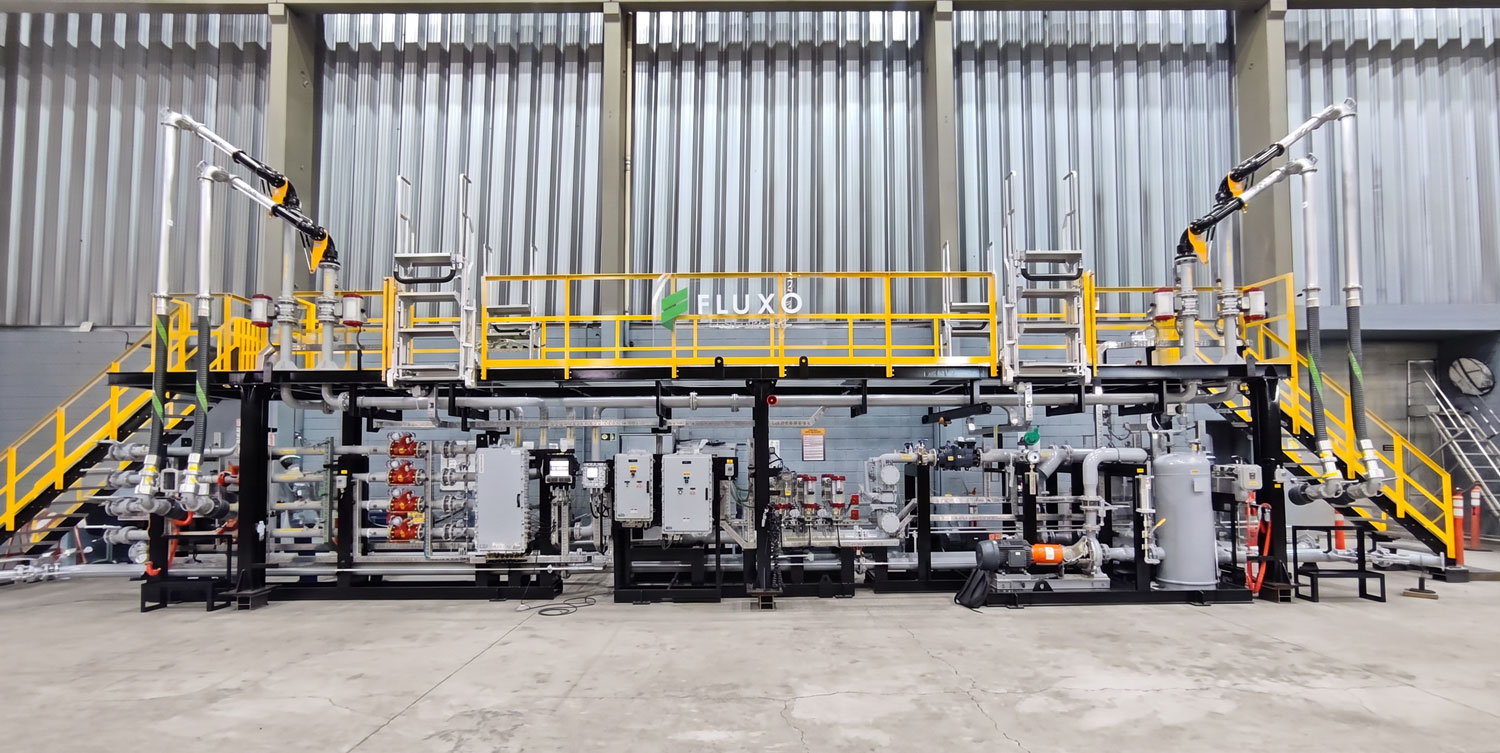
In Santarém, the work focused on road transport operations. The supply included a loading skid with four measuring sections and four bottom loading arms, as well as a double unloading skid, designed to operate with gasoline, diesel, biodiesel, and ethanol. The systems incorporate flow measurement, control and shut-off valves, grounding and overflow prevention, density monitoring, temperature measurement, and sampling systems.
In Miritituba, cargo is transported by barges. The terminal has received a four-section loading and unloading skid, prepared to handle S10 Diesel, S500 Diesel, Gasoline, and Marine Diesel. The setup includes control, blocking, and instrumentation equipment, as well as drainage and deaeration resources.
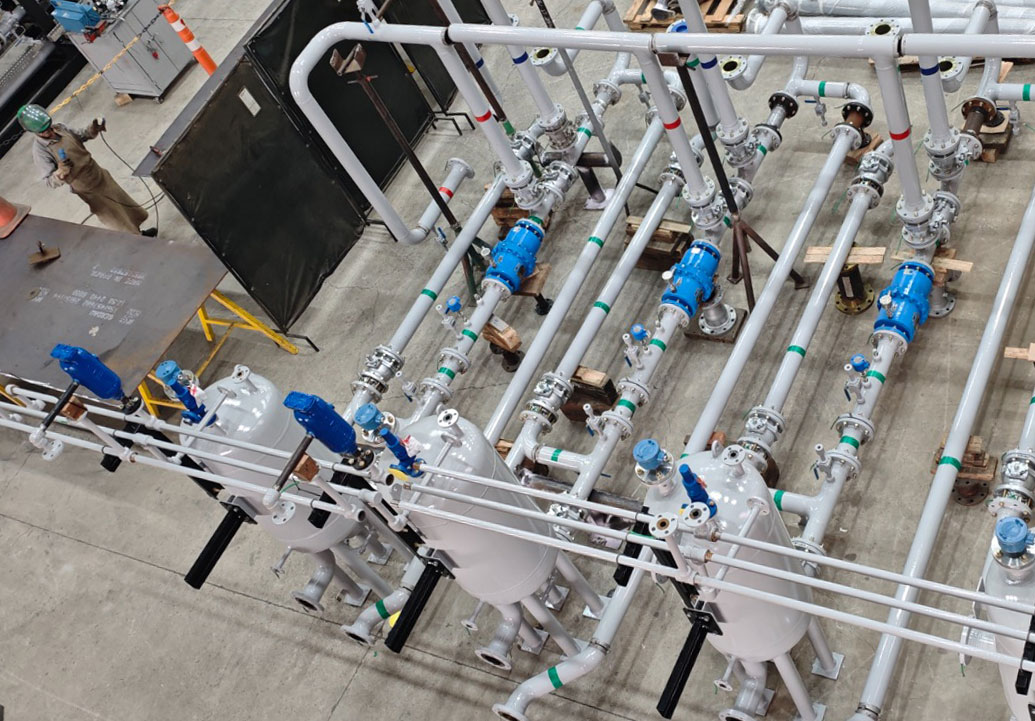
In both projects, the technical response was structured around connecting mechanical, electrical, and instrumentation equipment in skid-mounted assemblies—compact units that concentrate the main components in a single structure. The scope also included engineering, technical documentation, factory acceptance testing, assembly supervision, commissioning, start-up, field tests and training of operation and maintenance teams.
From a specific application to a replicable solution.
For terminal operators and distributors, integrating different systems into a single solution is essential to reconcile performance, security, and predictability in deployment. This configuration reduces interfaces between suppliers and execution steps, facilitates deployment coordination, and contributes to a more predictable start-up. The experience can also serve as a reference for other terminals facing similar challenges. Among the main advantages of this model are:
Reduce technical interfaces
Measurement, control, instrumentation, and safety are considered together, reducing interfaces between solutions specified separately.
Anticipating implementation challenges
Assembly conditions, processes, testing, and commissioning are considered from the engineering stage, allowing for the anticipation of potential interferences in the field.
Adapting the solution to the application
Modalities, products, and operating conditions guide the configuration of each application, as demonstrated by the projects in Santarém and Miritituba.
Simplify the go-live process.
Engineering, manufacturing, testing, assembly, commissioning, and training are coordinated throughout the deployment, providing greater continuity to each stage.
Expanding infrastructure demands increasingly interconnected systems.
As new logistics corridors advance, fuel infrastructure requires investments to keep pace with an increasingly diversified and multimodal dynamic. This evolution amplifies the need for operations prepared to handle multiple products, routes, and transport conditions.
Thus, connecting technologies and adapting infrastructure to each application is likely to become even more relevant. For the sector, the challenge will be to keep up with the expansion of logistics without losing flexibility, reliability, and agility in the face of new demands.