
Autonomous mechanical systems ensure precise and safe water discharge from storage tanks
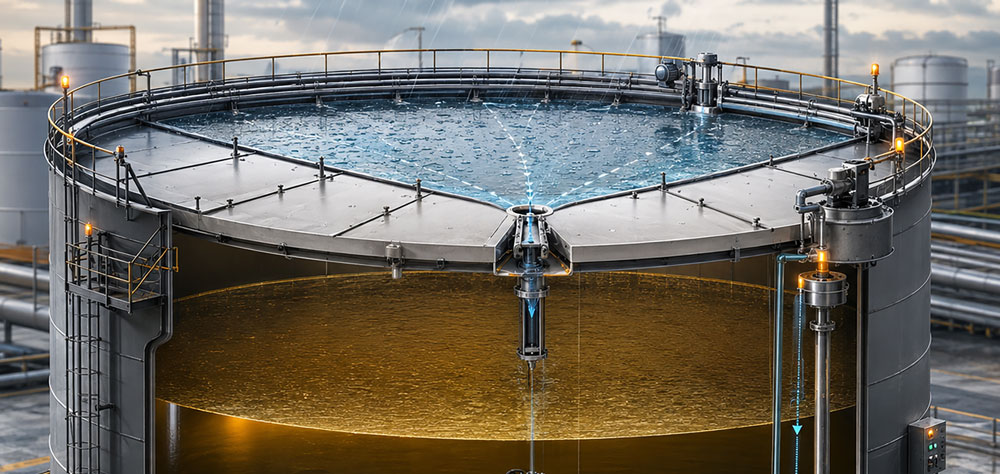
The operation of large hydrocarbon storage parks requires strict control over the presence and disposal of water in their assets. The accumulation of water at the bottom of the tanks, as well as the drainage of rainwater from floating roofs, directly influences the measurement of the stored product, the volume of effluents generated and, above all, the safety of the facilities.
Given these operational requirements, in recent years, preserving product integrity and committing to sustainability have driven the adoption of reliable and environmentally responsible automatic shut-off drainage systems capable of reducing human intervention and ensuring water drainage without carrying away hydrocarbons.
Draining water from the bottom of the tank.
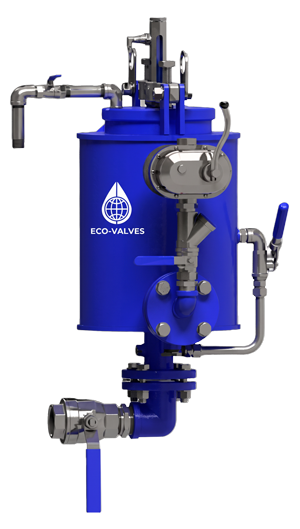
The traditional method of removing accumulated water from the bottom of tanks is often inefficient. Manual drainage is imprecise and frequently causes product and water to mix, generating large volumes of contaminated waste. Additionally, the process requires operators to be in constant proximity to potentially hazardous fluids.
With the TOO Type Automatic Drain Valve, Eco-Valves and FLUXO introduce to the national market a fully mechanical and emission-free fluid separation system. The equipment operates at the interface between water and hydrocarbon, automatically draining only the water.
Its operation, independent of electrical or pneumatic power, provides simplicity of operation, reliability, and low maintenance costs. By performing clean and precise separation, this technology considerably reduces water treatment costs and the risk of human exposure, establishing itself as a high value-added tool for warehousing operations.
Benefits
- Full autonomy: Purely mechanical operation, requiring no external power or control instrumentation.
- Wastewater reduction: Automatic drainage of water only, separating it from hydrocarbons.
- Operational safety: Elimination of the risk of operator exposure during manual drainage.
Passive protection for floating roof drainage.
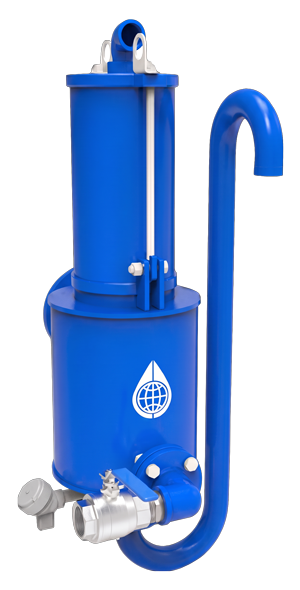
In tanks with floating roofs, continuous drainage of rainwater is essential to prevent structural overload. However, failures in the roof's water drainage system can allow product to leak into the storm drain system, requiring a mechanism to immediately identify and contain any leaks.
The TOR Type Automatic Separation Valve, also from Eco-Valves, was created to meet this need. Installed in the drainage line of the floating roof and normally operating open, it ensures the continuous and safe disposal of rainwater. Like the TOO valve, its response is governed by a calibrated float, sensitive to differences in specific weight. Therefore, if an incident occurs and hydrocarbon enters the line, the float identifies the change in fluid density and the valve closes automatically, interrupting drainage before the product is uncontrollably discharged into the environment. Because it is a self-actuated device, without external power, this response occurs even in the event of a power outage at the plant.
Furthermore, TOR features a key that triggers a remote alarm, acting as an environmental safety unit fully integrated into the facility's control system. With this solution, drainage for floating roofs incorporates an additional layer of reliability and sustainability.
Benefits
- Environmental safety: Automatic shut-off upon detecting hydrocarbons.
- Continuous drainage: A normally open device for draining rainwater.
- Remote monitoring: It has a position indicator and can be connected to alarm systems.
Innovation in service of industrial sustainability.
The introduction of Eco-Valves automatic valves to the Brazilian market, in partnership with FLUXO, reinforces the global trend of adopting high-performance, independently operating technologies in industrial operations. These devices represent an advance in the pursuit of more reliable and sustainable operations, minimizing product losses and costs associated with wastewater treatment.
“The integration of these valves into our portfolio is a fundamental step in offering customers alternatives that combine operational robustness with resource optimization. We believe that innovation should simplify processes and promote a cleaner and safer future for the industry, through systems that operate with zero emissions and maximum autonomy,” says Newton Kajimoto, Product Manager at Eco-Valves in FLUXO.
In practice, with systems that do not require external power and operate automatically, storage operations gain in performance and safety. The elimination of hydrocarbon drainage into effluents and the active prevention of environmental contamination position these valves as a strategic investment, aligning operational excellence with the industry's sustainability goals and establishing a new standard for responsible ecological management.