
Precision electrostatic separation drives expansion of domestic refining
The processing of different oil streams demands rigorous quality control of the treated oil from refineries. Proper preparation of the feedstock requires, among other things, the removal of impurities such as water, salts, and sediments. When not properly removed, these contaminants can compromise subsequent refining stages, reduce operational efficiency, and generate additional maintenance costs.
This need also applies to projects to adapt existing units, where it is necessary to prepare the oil to meet the requirements of subsequent stages without the objective of expanding the refinery's processing capacity. In this context, the sector has been seeking separation technologies that combine high treatment efficiency with increasingly strict purity levels.
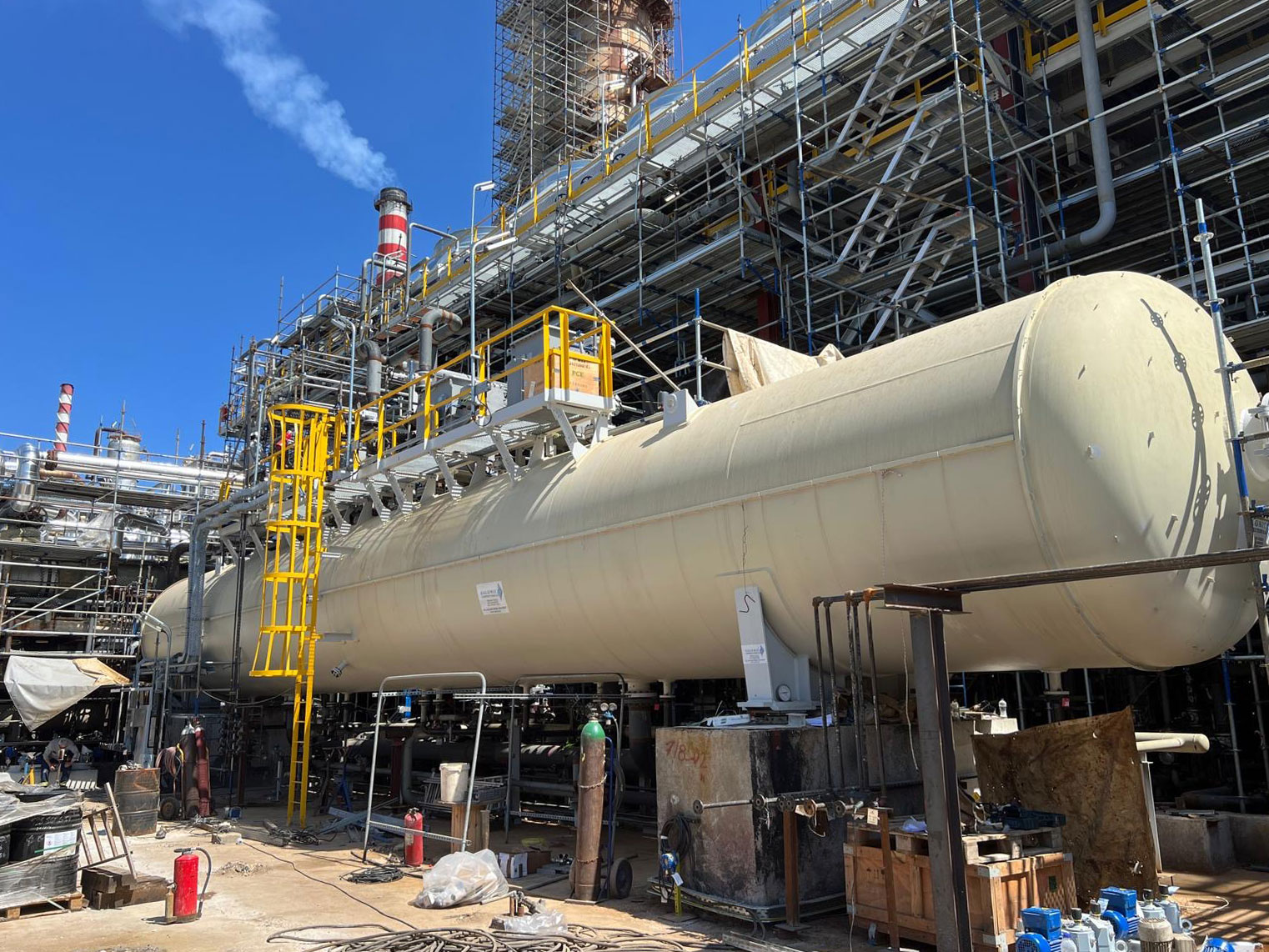
At Reduc, desalination technology enables the processing of pre-salt oil for lubricants.
One of the most established alternatives for this challenge is electrostatic separation using desalters. Upon entering the pressure vessel, the emulsion is subjected to a high-voltage alternating current (AC) electrostatic field generated by the vessel's internal electrodes, which are powered by three 50 kVA transformers (x 3). This field promotes the coalescence of water droplets; that is, the grouping of these droplets, when joined, separates them from the oil due to differences in density. After separation, the oil is drained from the top of the vessel, while the water, containing salt and other contaminants, is removed from the bottom.
A recent example of this application on an industrial scale is occurring at the Duque de Caxias Refinery (Reduc) in Rio de Janeiro. Petrobras contracted two desalting units with a flow rate of 8,000 m³/d each for implementation at the entrance of U-1510, the Atmospheric and Vacuum Distillation Unit for Lubricants. The objective is to enable the processing of Brazilian pre-salt oil to produce raw materials for lubricant manufacturing, reducing the current need to import oil to supply this unit. The equipment will operate as the second stage of the desalting process.
The supply, contracted this year, is being led by FLUXO, in partnership with its technology licensor NEET Process, which specializes in electrostatic treaters for desalting and dehydrating petroleum. The American company is responsible for the technology used in the vessels, of the Advanced Control Horizontal Flow Electrostatic (ACE) type, which uses a proprietary mixing device for emulsion treatment. The scope includes basic and detailed engineering, manufacturing, services and supervision, technical assistance during start-up and equipment testing.
The vessels will be manufactured in conjunction with Nuclep, in Itaguaí (RJ). The equipment weighs approximately 120 tons and should process a substantial part of the refinery's production, guaranteeing treated oil with 0.5% of BS&W (sediments and water) and a maximum salt content of 2.85 mg/l. The expected operational efficiency is 99%, with oil content in the effluent limited to 500 ppm or less.
“Evaluating a desalination technology solely based on the equipment or treatment capacity is a limited view. It is important to consider the effects that contaminant control can have on subsequent stages. Therefore, its performance must also be observed from the economic perspective of the operation,” says Daniel Barros, Operations Director at FLUXO.
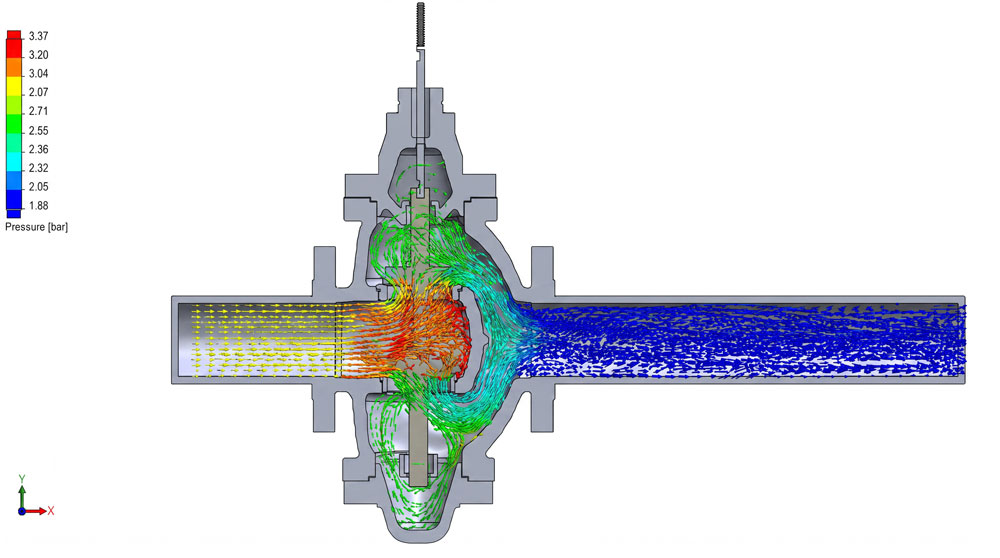
Control and performance gain importance in adapting the refining process.
The Reduc project highlights an important shift in Brazilian refining: adapting facilities to increase flexibility in processing different oil streams. The incorporation of new desalting plants aims to enable the use of domestically produced pre-salt oil, replacing the oil currently imported to supply this operation, while preserving the performance and reliability of the process. In this context, the combination of advanced technology, specialized engineering, and domestic manufacturing contributes to meeting the specific needs of the local market.
The evolution of the sector, therefore, is not limited to the final stage of processing. It also involves the processes that prepare the oil for the following phases, placing desalting in a strategic position within the operation.